Is ‘dry skin’ and ‘dehydrated skin’ any different?
New patients often refer to their skin being dehydrated skin rather than referring to dry skin. So, what is the difference? In this blog I intend to unpack the differences and bust a myth or two along the way.
We’ll start off by examining the actual cause of dry skin within the cells. The basis of the problem is the low production of natural oils and hygroscopic or water retaining molecules in the skin. When these aren’t present in large enough amounts, our skin isn’t able to retain moisture, losing too much through evaporation.
Moisture evaporates from our skin all day every day. It even has a name. It’s called ‘perspiratio insensibilis’ or transepidermal water loss (TEWL). Unlike perspiration, perspiratio insensibilis is not visible. When the skin has too few lipids or water retention components, reducing the effectiveness of the barrier function of the skin, excess water can escape through evaporation. This action will leave the skin dehydrated and the result is a stratum corneum with severely depleted water content.
So, dry and dehydrated skin are really two sides of the same coin. The skin’s oil or lipid content is intertwined with the retention of moisture in the stratum corneum. It can happen that skin is stripped of its water content in the stratum corneum by, for example, excessive cleaning and is then referred to dehydrated skin, while skin that is naturally dry because of inherited, genetic reasons such as eczema is typically referred to as dry.
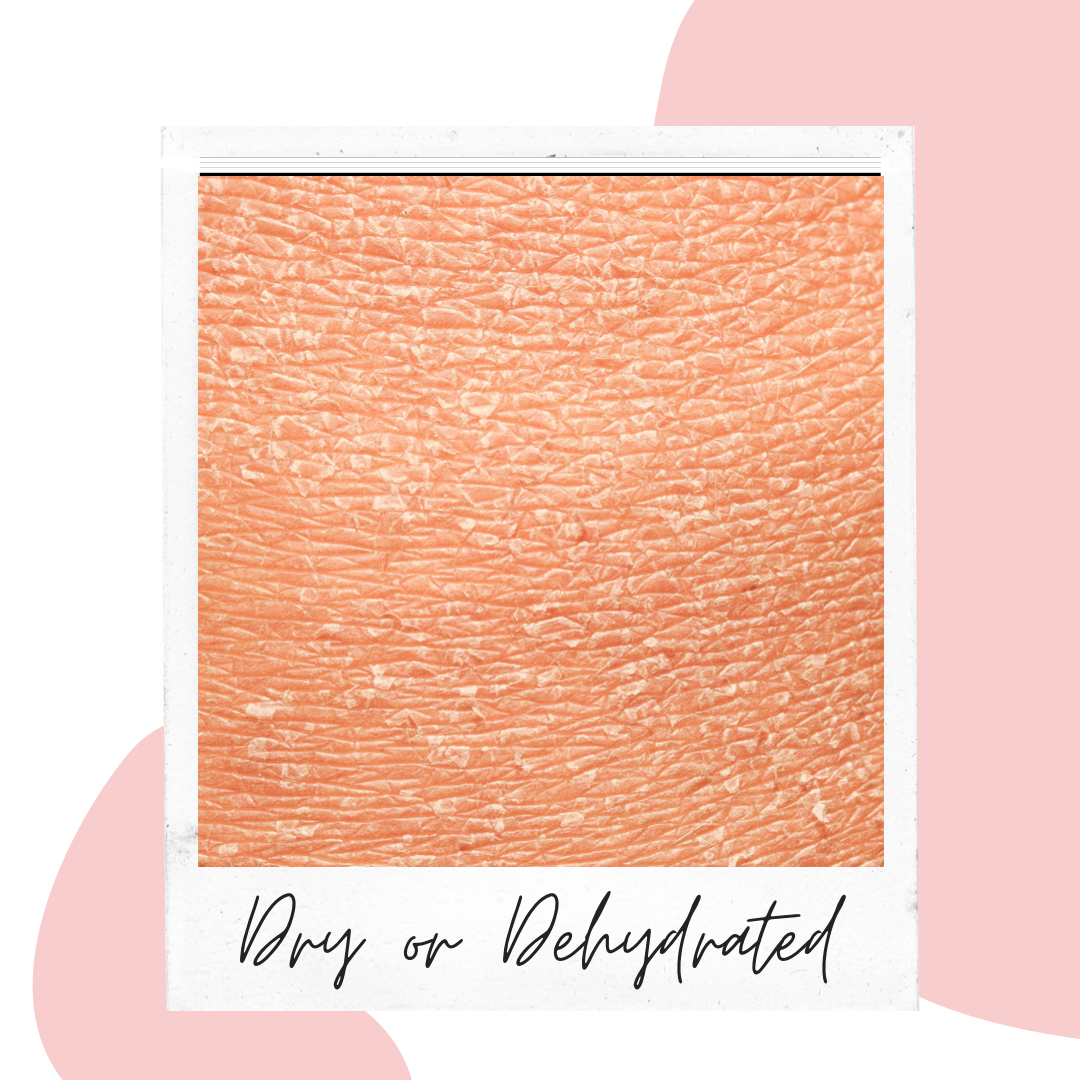
Each of these scenarios have as their end point lower water content in the skin’s stratum corneum. It’s what causes the discomfort associated with dry or dehydrated skin. When the moisture content of the skin’s top layer get’s to less then 10% to 15%, the skin starts to feel dry or dehydrated. At this stage it may start to look flaky and rough. It may also start to feel tight. If the dryness becomes bad enough skin may become red, inflamed, and start to itch. This is known as dryness eczema.
Excessive skin cleansing causes the same outcome as genetic skin dryness. Cleaning reduces the lipids in the skin as they are stripped out. This damages the barrier that the skin forms against the outside environment, boosting the evaporation of moisture (TEWL). This, in turn, leads to lower water content in the top skin layer.
So, this is the reason why therapists don’t differentiate between dry and dehydrated skin. There is little to distinguish the two. They are so closely intertwined that they can’t be clearly separated. I prefer to categorise skin types into five groups. This overcomes the simplistic reference to dry or dehydrated skin types.
My categories do include two groupings for dry skin. This is necessary because the treatment required for dry skin without spots is very different to the skincare requirements of dry skin with spots. Dry skin with breakouts is a growing concern particularly amongst adult women.
Like most therapists, we categorise skin into various types;
• Normal skin
• Oily skin
• Combination skin which normally results in dry cheeks and an oily nose, forehead, chin
• Dry skin with breakouts
• Dry skin with no breakouts
The treatment for dry skin revolves around enabling the skin to retain water. We can use various means to achieve this. We can, for example, supply skin with the water retention materials that it lacks, or we can feed it with lipids. The treatment depends upon the need. Dry skin with no breakouts will respond very well to lipid treatment, whereas this treatment must be strictly avoided where breakouts are present. Under these conditions we use non-oily water retaining solutions like hyaluronic acid.
Treatments in-clinic can also help to rehydrate the skin. These include Profhilo and other skincare treatments and supplements.
Finally, it is necessary to understand that just because your skin feels dry, doesn’t mean it is. Skin that feels tight and dry may have micro-inflammation. This can arise from seborrheic dermatitis or rosacea outbreaks. If this is the case, though it may feel soothing, pasting on large amounts of rich moisturisers will only aggravate the inflammation.
Micro-inflammation requires treatment with anti-inflammatories of prescription strength. Attempting to alleviate the symptoms by layering ointments and creams onto the area is futile. These are complicated conditions that require the intervention of a trained therapist that can tailor a skincare treatment for your skin. Dry skin with breakouts is one of the most complex conditions to treat so it is particularly important to get professional care if you have this problem.
Dry or Dehydrated